Batman Organization Gotham Citizens Restore Order
Batman the Dark Knight Returns 10th Anniversary Edition HardcoverBatman restores order in Gotham when the city’s institutions can no longer contain the crisis and ordinary residents are left exposed to violence, panic, and competing claims to power. The action is significant because Batman does not merely defeat an individual opponent: he turns his authority, planning, and symbolic force into a mechanism for collective mobilization, helping civilians reclaim the streets while raising the question of whether stability now depends on a private vigilante rather than lawful government.
Causes and Background
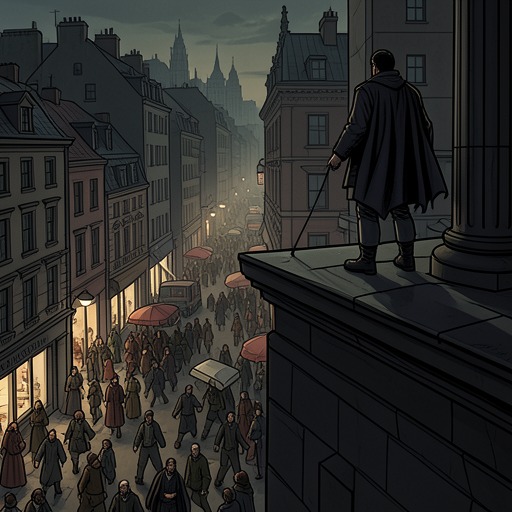
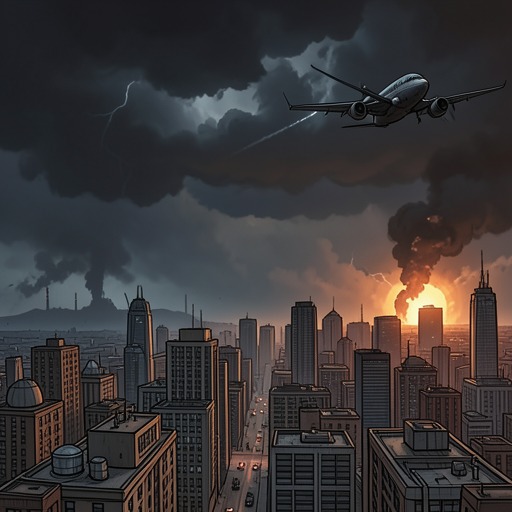
Gotham’s disorder develops through the accumulation of social decay, organized violence, institutional weakness, and emergency conditions. The Mutant gang has already demonstrated that a disciplined criminal force can dominate public space, while the Gotham City Police Department and city authorities struggle to respond effectively. Later, the blackout and the broader crisis further loosen the ordinary structures that regulate movement, communication, and public safety. In that atmosphere, the boundary between civic order and open coercion becomes unstable: whoever can organize people, provide direction, and impose consequences can begin to act as the city’s effective authority.
Batman’s intervention grows from this vacuum. His return has already shown that fear and spectacle can interrupt patterns of violence, but restoring order requires more than a dramatic confrontation. It requires information, transport, leadership, and a shared framework through which frightened residents can recognize one another as participants rather than isolated victims. Batman supplies that framework by presenting the crisis as something Gotham’s people can collectively confront.
What Happens
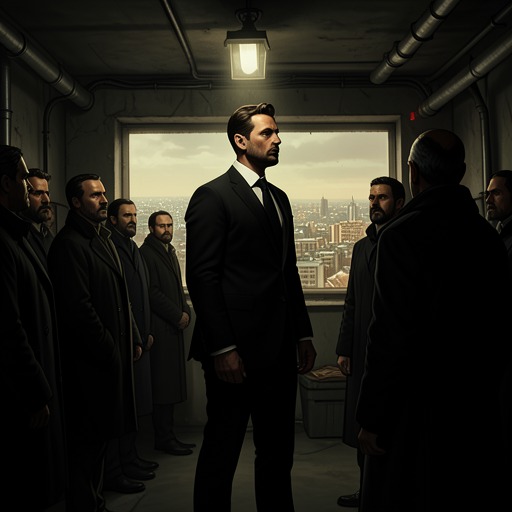
Batman organizes Gotham’s civilians during the breakdown of public order. He directs residents toward practical action and gives them a common purpose: protecting their neighborhoods and reestablishing basic control over the city. The mobilization is not portrayed as a conventional governmental operation. Its coherence comes from Batman’s personal command, his reputation, and the symbolic meaning attached to the Batsuit, the Bat-Signal, and the idea of Batman’s Return. These signs transform scattered fear into coordinated resolve.
The action also depends on networks created during Batman’s renewed campaign. Carrie Kelley / Robin and Batman’s allies extend his reach, while vehicles, weapons, communications, and local knowledge turn a symbolic movement into an operational one. The result is a layered form of organization: Batman provides strategic direction, his allies transmit and enact it, and civilians supply the numbers needed to occupy and secure public space. Authority therefore moves outward from one figure into a collective response without becoming fully institutionalized.
The restoration of order occurs alongside the rise of the Sons of Batman. Their emergence demonstrates that Batman’s example can be reproduced by others and that his intervention has consequences beyond the immediate emergency. The same atmosphere that allows civilians to defend their communities also permits a militant successor movement to claim the city. Batman’s organization of the public is thus both restorative and generative: it suppresses immediate chaos while creating a political force whose future conduct cannot simply be assumed to match his intentions.
Methods and Sources of Authority
Batman’s effectiveness rests on a combination of practical resources and charismatic legitimacy. The Gotham City Police Department possesses formal authority, but its weakened capacity prevents that authority from reliably producing safety. Batman, by contrast, lacks ordinary legal authorization yet commands attention because his identity, history, and demonstrated willingness to act make his instructions credible. His power is neither purely physical nor purely symbolic. The symbol gives people a reason to follow; organization gives that following concrete effect.
The intervention also reveals a distinction between mobilization and domination. The Mutant gang seeks control through intimidation and territorial force. Batman’s response likewise relies on fear and disciplined action, but he redirects those instruments toward collective defense. Civilians are not merely passive recipients of protection; they become participants in the restoration of their own neighborhoods. Even so, the structure remains dependent on Batman’s exceptional status. The city’s recovery does not begin with a repaired bureaucracy or a newly authorized public institution. It begins with a person who decides that normal procedures have failed and acts in the resulting emergency.
Consequences and Aftermath
The immediate consequence is that Gotham’s residents acquire agency during a period when official structures appear unable to guarantee it. Batman’s intervention converts the population from an endangered crowd into an organized social presence. That change matters materially, because criminals and opportunists face a city whose inhabitants are no longer uniformly isolated, and politically, because public obedience begins to attach itself to Batman’s leadership rather than exclusively to the state.
The longer-term consequences are more uncertain. The Sons of Batman inherit the momentum of collective action and turn it toward taking over Gotham. Their rise suggests that mobilization can outlive the emergency that produced it, and that a movement built around a powerful symbol may be claimed by followers with different levels of restraint. Batman’s restoration of order therefore contains a warning within its success: a city rescued from one form of unauthorized rule may remain vulnerable to another if no durable civic structure replaces the emergency command.
Narrative Significance
The event crystallizes the central political tension of The Dark Knight Returns. Batman is presented as a force capable of doing what exhausted institutions cannot, yet that competence does not resolve the question of legitimacy. His intervention is humane in its immediate orientation toward endangered citizens, but it also normalizes exceptional personal authority and makes public order dependent on a figure outside the law.
The action further links Batman’s personal return to Gotham’s collective transformation. He does not simply resume an old role and leave the city unchanged. His presence reorganizes how residents understand danger, leadership, and their own capacity to act. Gotham’s recovery consequently becomes inseparable from Batman’s mythology: the city is restored through the symbol of the Dark Knight, but the spread of that symbol produces new forms of power that will require control, judgment, and eventual succession.